
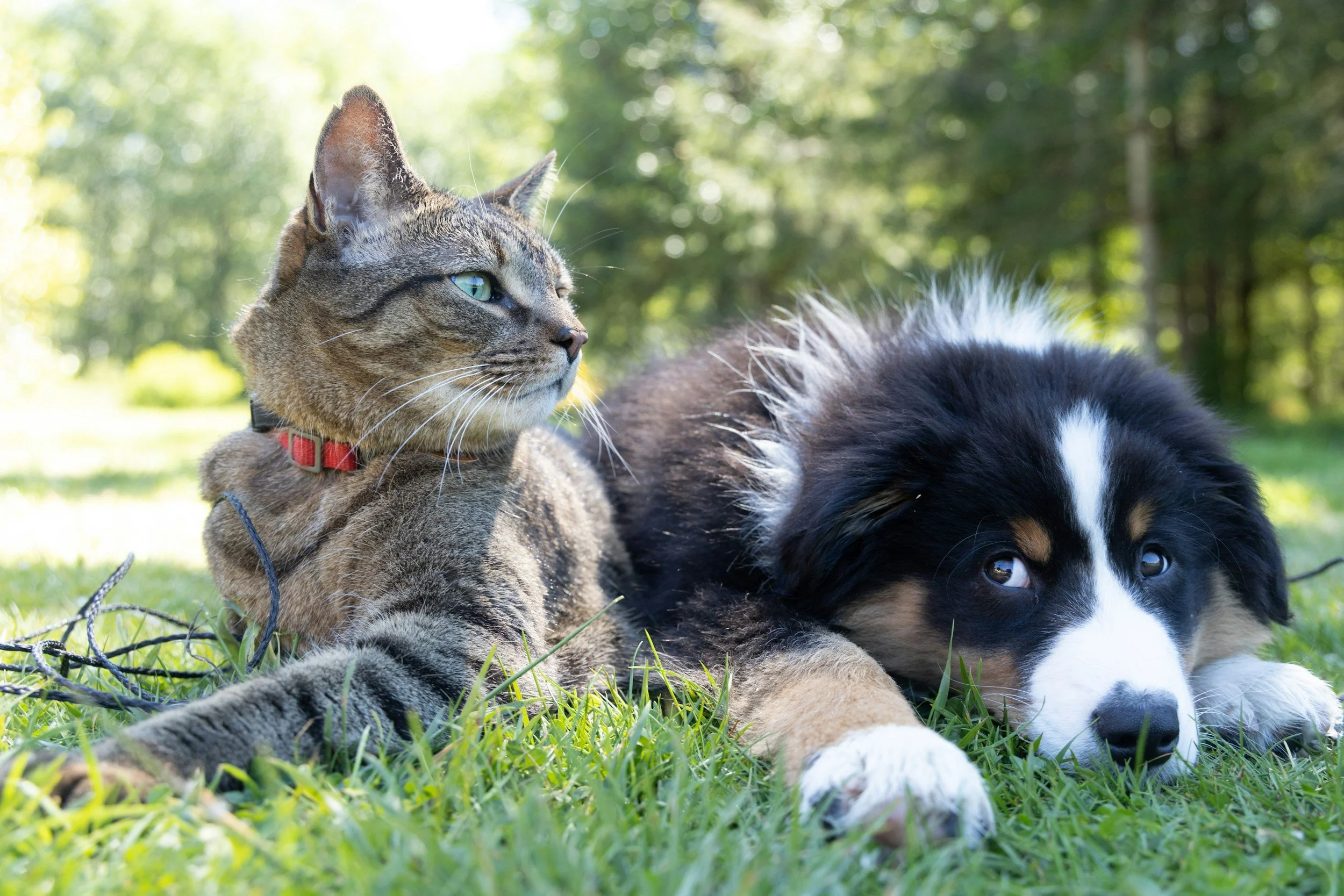
Most people consider their dog or cat a member of the family, and many of our readers would agree. Of all the family law articles Voice Lawyers has written over the years, our articles on pets and the family law system have been the most popular and widely read (we have linked them at the end of this article). That should not be surprising, as roughly 73% of Australian households own a pet, according to Animal Medicines Australia's March 2025 report.
So, what happens when a family breaks up through divorce or separation? Who keeps the pet, and how do Australian courts decide?
Until 10 June 2025, the courts treated pets no differently from any other piece of property, be it a couch or a fridge. On 10 June 2025, a range of changes to the Family Law Act 1975 came into effect, including new provisions on what happens to pets in family law matters. The changes set out what counts as a pet and what kinds of orders the court can make.
Wright & Berger
Wright & Berger is a family law matter that came before the court last year. The case is particularly interesting because it was the first time the court had to decide what happens to the family pet since the major family law changes of June 2025.
Ms Berger and Mr Wright began their relationship in February 2016 and separated in January 2023. They had a child together in 2022, and during the relationship they both cared for Ms Berger's son from her previous marriage. Shortly after separating, both began court proceedings, with Mr Wright seeking urgent child recovery orders and Ms Berger seeking a family violence order against Mr Wright. Despite this, they moved back in together in June 2023 and withdrew the proceedings a month later. The relationship broke down again some months later, and Mr Wright started family law proceedings again in November 2023.
Twenty-one months later, in August 2025, the matter reached a final hearing to decide how the property pool would be divided and what parenting arrangements would apply for their child, who was by then three years old.
At the final hearing, the parties agreed on parenting arrangements for their child, and the court decided the handful of issues they could not agree on. They also resolved most, but not all, of the property issues. The one outstanding issue was what would happen to the family's 16-year-old dog.
The parties could not agree. Mr Wright sought orders that Ms Berger would own the dog, but that the dog would be in his care whenever the child was, that he would pay half of the dog's vet bills and registration fees, and that each of them would keep the other updated on the dog's health.
Mr Wright argued that he had made significant contributions to the dog's care, having paid a substantial share of its veterinary and maintenance costs, and that he had looked after the dog on his own for stretches of time after the separation. He accepted that the court could not order a shared care arrangement for the dog under the new laws. However, he argued that the court could order the shared use of property, and because the dog was legally property, the court could order that Ms Berger own the dog while he had the use of it.
Ms Berger sought orders that she own the dog. She pointed out that Mr Wright had accepted she was the owner in his own proposal, and that the court could not order a shared time arrangement for a pet under the family law legislation.
The court decided that Ms Berger would own the dog. She had acquired the dog before the relationship began, the dog had lived with her for 14 years, Mr Wright had signed a document in 2020 acknowledging her ownership, and Ms Berger's son from her former marriage was closely attached to the dog. The court accepted that Mr Wright had probably paid most of the dog's expenses during the relationship, but found that this meant his financial contributions to the relationship were greater than Ms Berger's, not that he was the dog's owner.
The court did note that, while it could not make shared care orders, nothing stopped Ms Berger from allowing the dog to spend time with Mr Wright and the child. That would be her decision to make as the dog's owner.
Why is this case interesting?
In Wright & Berger, the question of who owned the dog was fairly clear cut, given Mr Wright had acknowledged that Ms Berger was the owner. Even so, it offers a fascinating look at the first time the court tested and applied the new rules on pets in family law matters, and how it interpreted them.
What orders can the court make about my pet?
Under the 10 June 2025 changes, the court cannot make orders for the joint ownership of a pet or for a pet to be shared, as Mr Wright found during his proceedings. The court can only order that one party own the pet, that the pet be transferred to another person (as long as that person consents), or that the pet be sold and the proceeds divided.
Further reading
Voice Lawyers: New Family Law Amendments and what they mean if you are in Family Court: Pets, Economic Abuse and You (10 June 2025)
Voice Lawyers: Protections for Pets in Domestic Violence Relationships (1 November 2020)
Voice Lawyers: Family Pets: What happens to your pet during separation or divorce? (1 August 2020)
Voice Lawyers: Your Voice in Family Law Matters
This update is general in nature and is not legal advice. If you need help with a parenting dispute or a family law matter, at Voice Lawyers, we hear you.
If you are experiencing or contemplating separation, we suggest you seek legal advice as early as you can, even if you do not intend to separate for a few months or even years. We offer a 90-minute early separation strategy session to prepare and inform clients about the process. Every family's situation is different, and advice tailored to your circumstances can help you achieve the best possible outcome. We can also help if you would like a second opinion.
We help people navigate the complexities of family law with confident, practical advice. Contact us at office@voicelawyers.com or call 02 9261 1954 to book a consultation with one of our lawyers.
By Enda Byrne